Access shipped the Virus TI with an x86 kernel driver that never made the jump to Apple Silicon. Aleph Virux rebuilds the whole stack from scratch in userspace — no kext, no DriverKit — so your Virus TI Snow, Desktop, or Polar shows up as a plugin again. The original control surface, as an AUv3 / VST3 on macOS and a control app on Android.
Aleph Virux rebuilds the Access TI software stack from the ground up so the hardware you already own keeps working on the machines you actually use today.
Runs natively on aarch64 — no Rosetta, no x86 kernel extension. The original Access software was never ported to Apple Silicon; Virux is built for it from day one.
The whole USB stack lives in userspace and talks to the device over IOUSBLib. Nothing loads into the kernel, so there's no system extension to approve and no reboot to install.
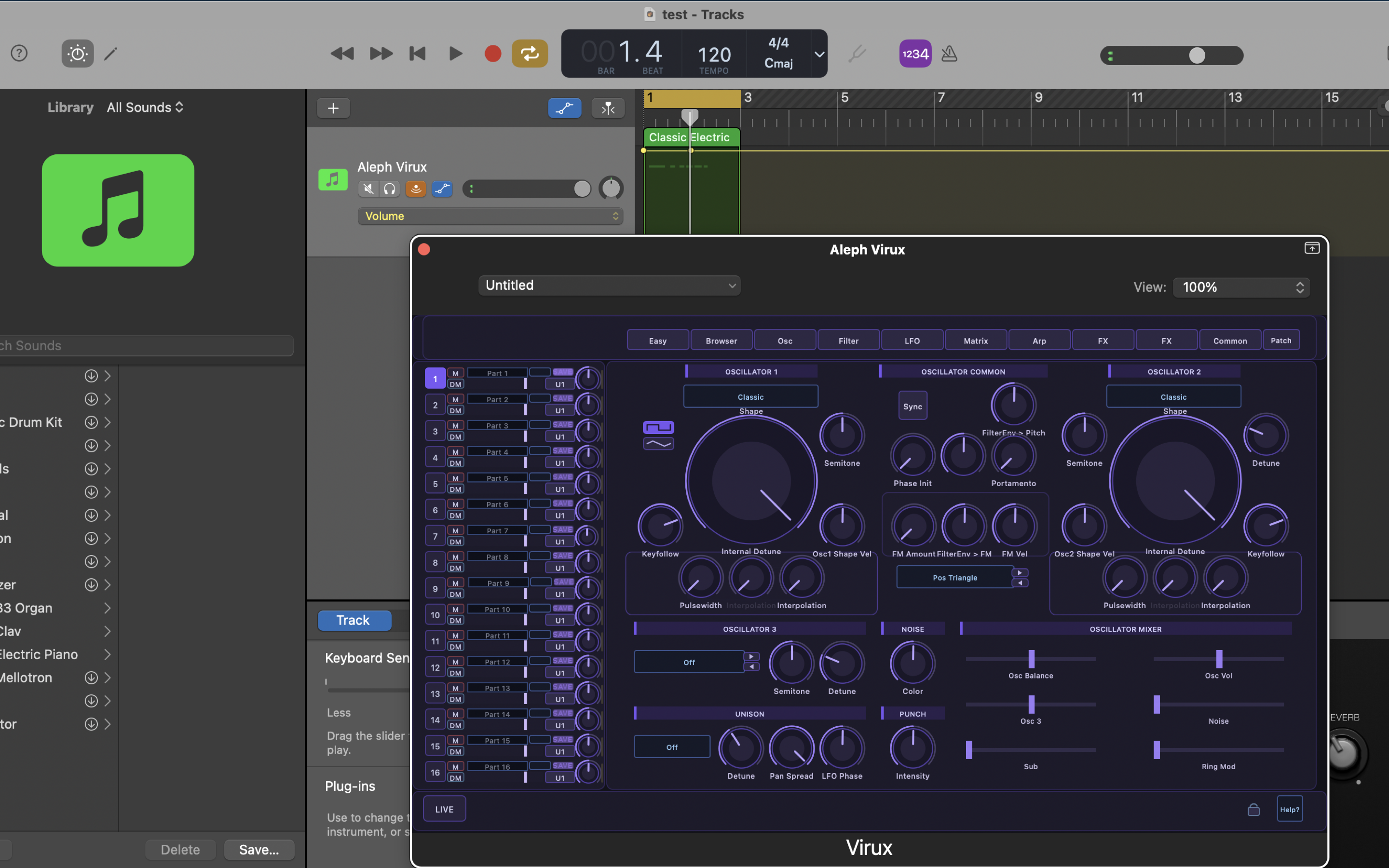
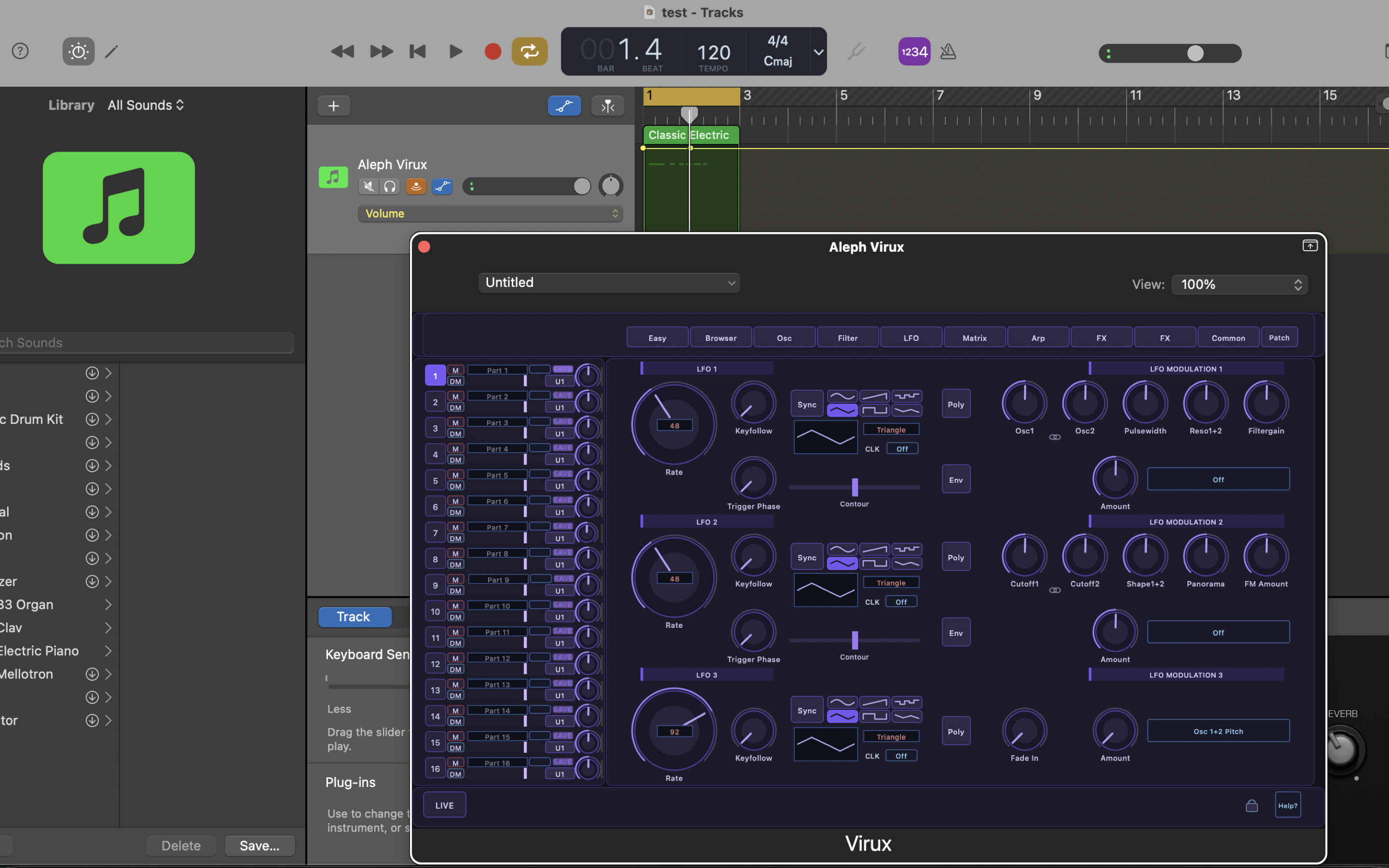
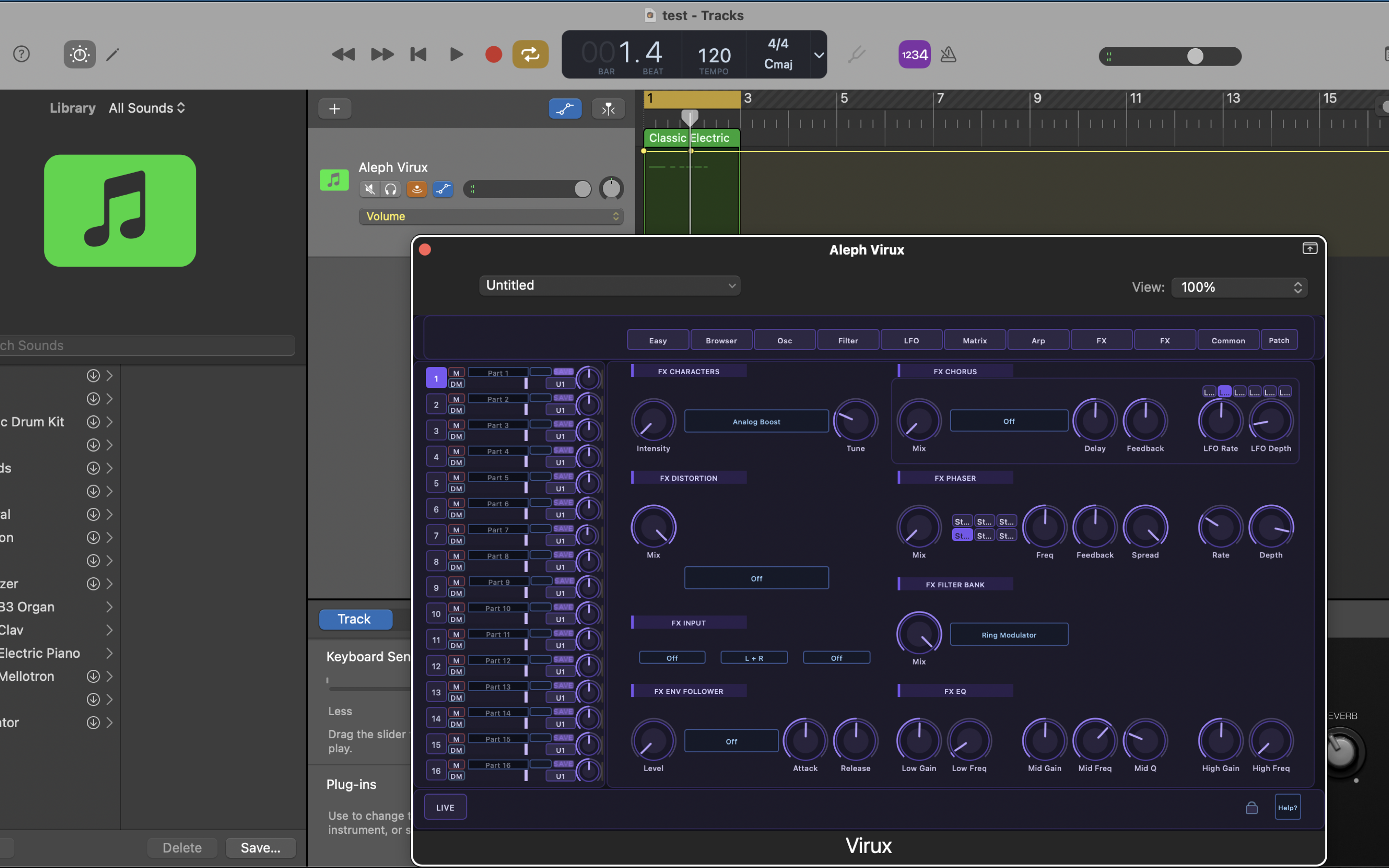
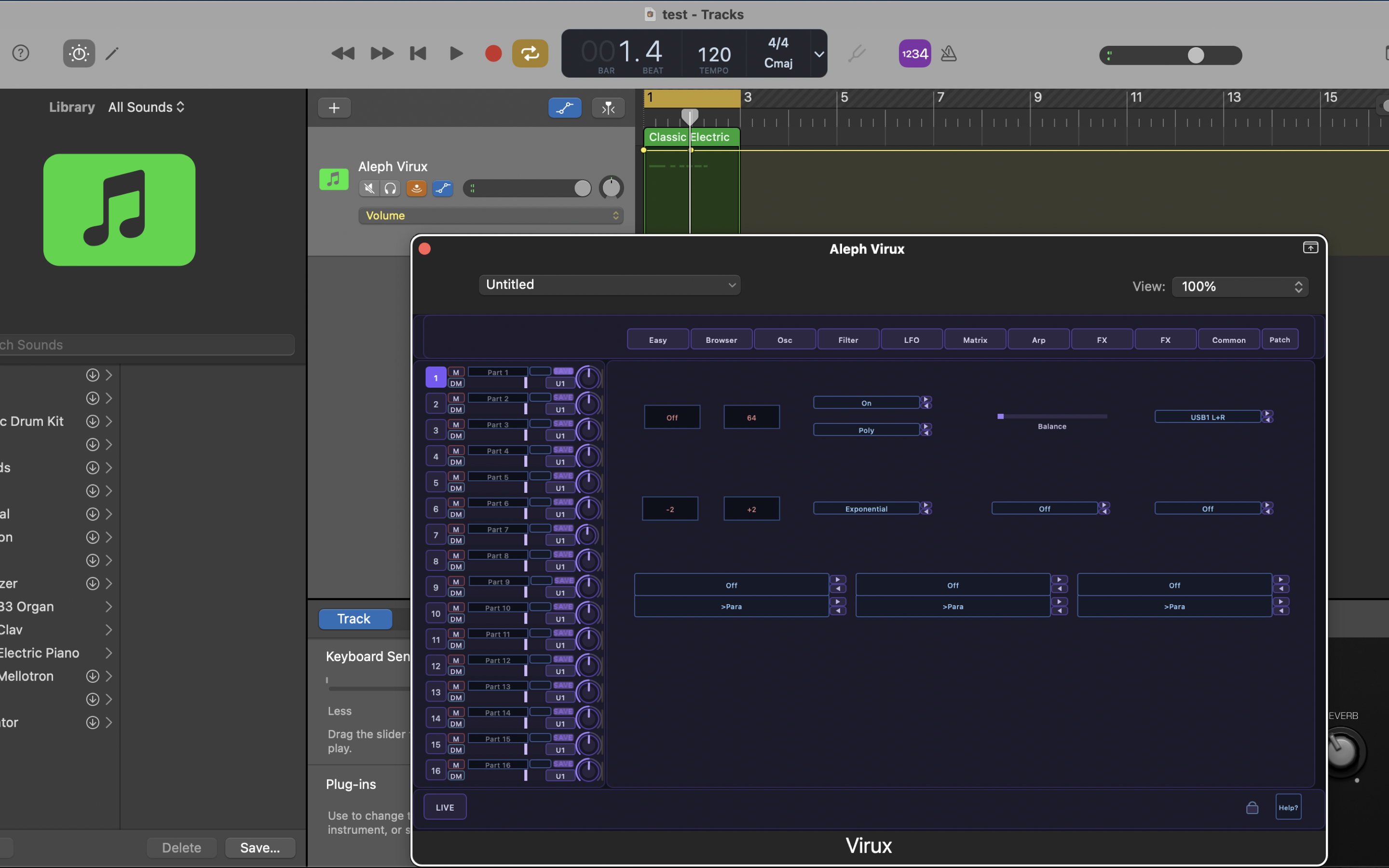
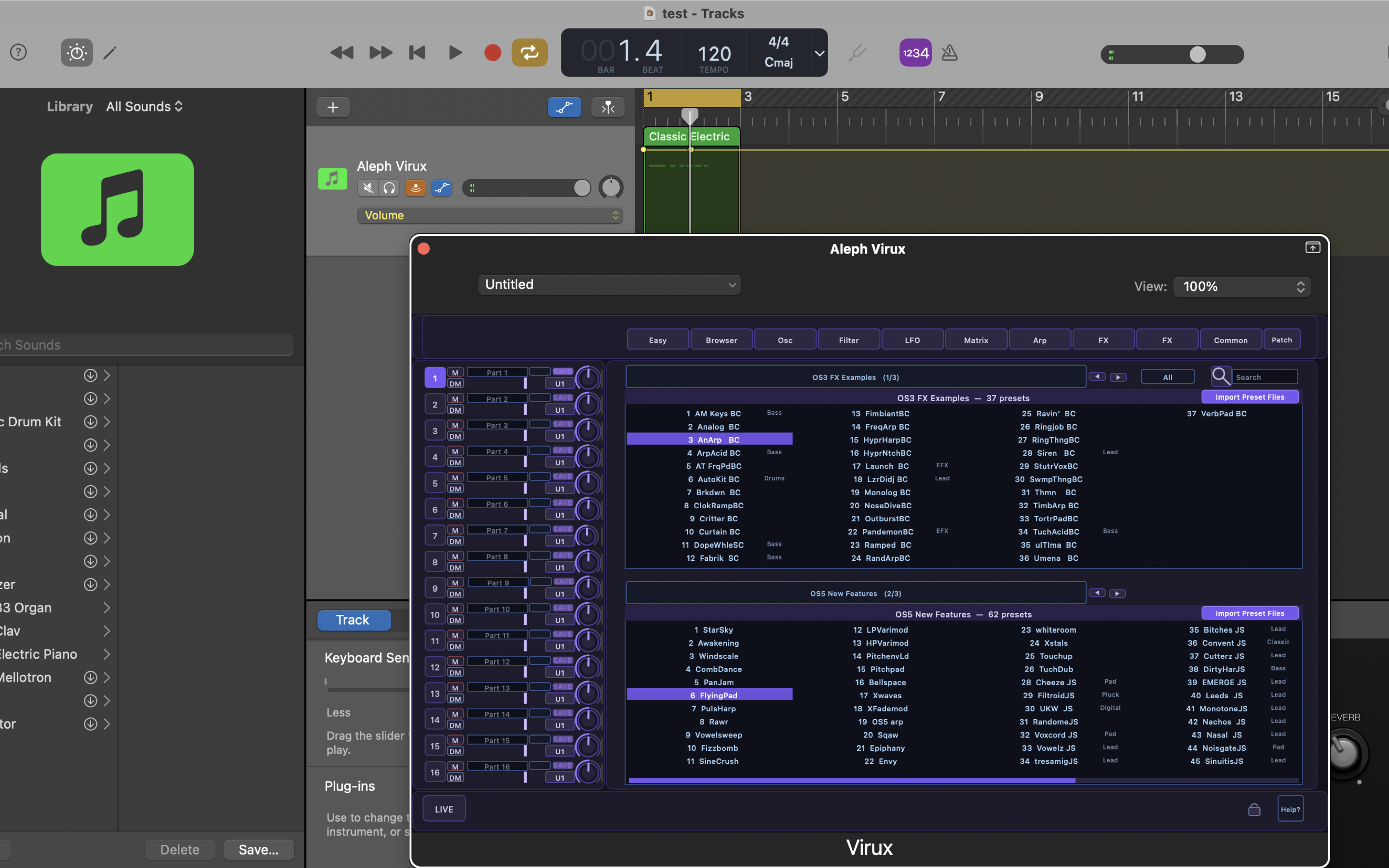
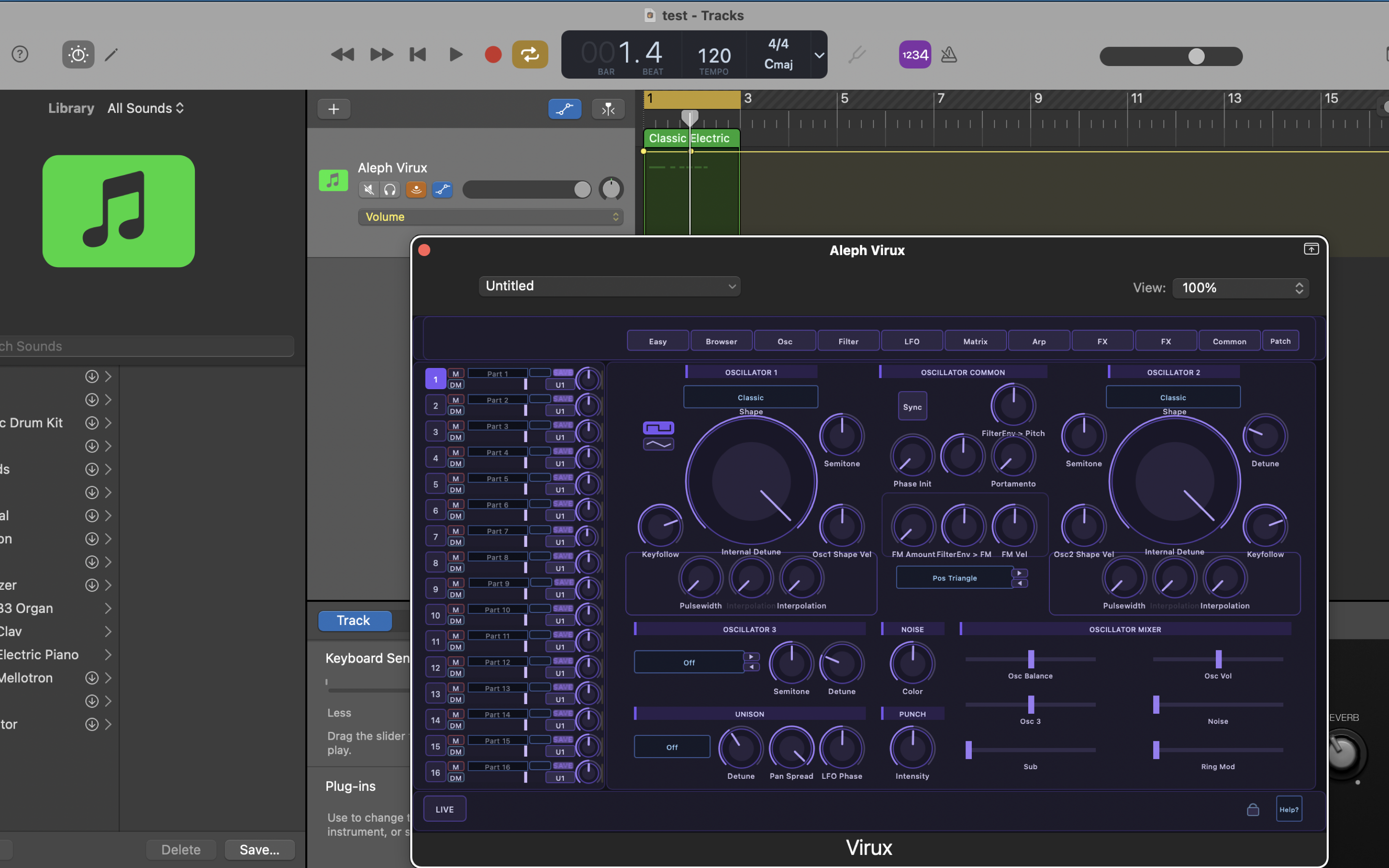
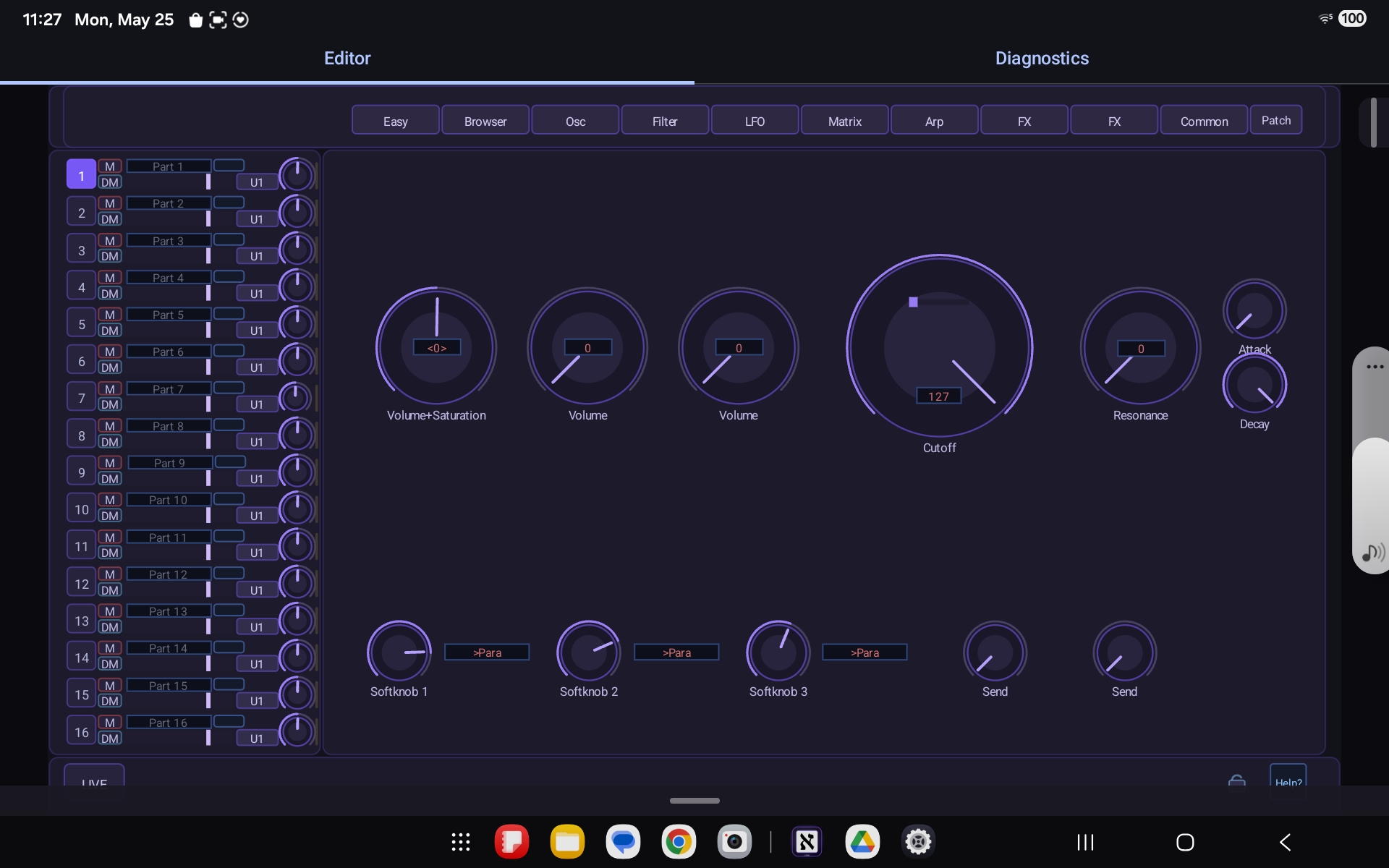
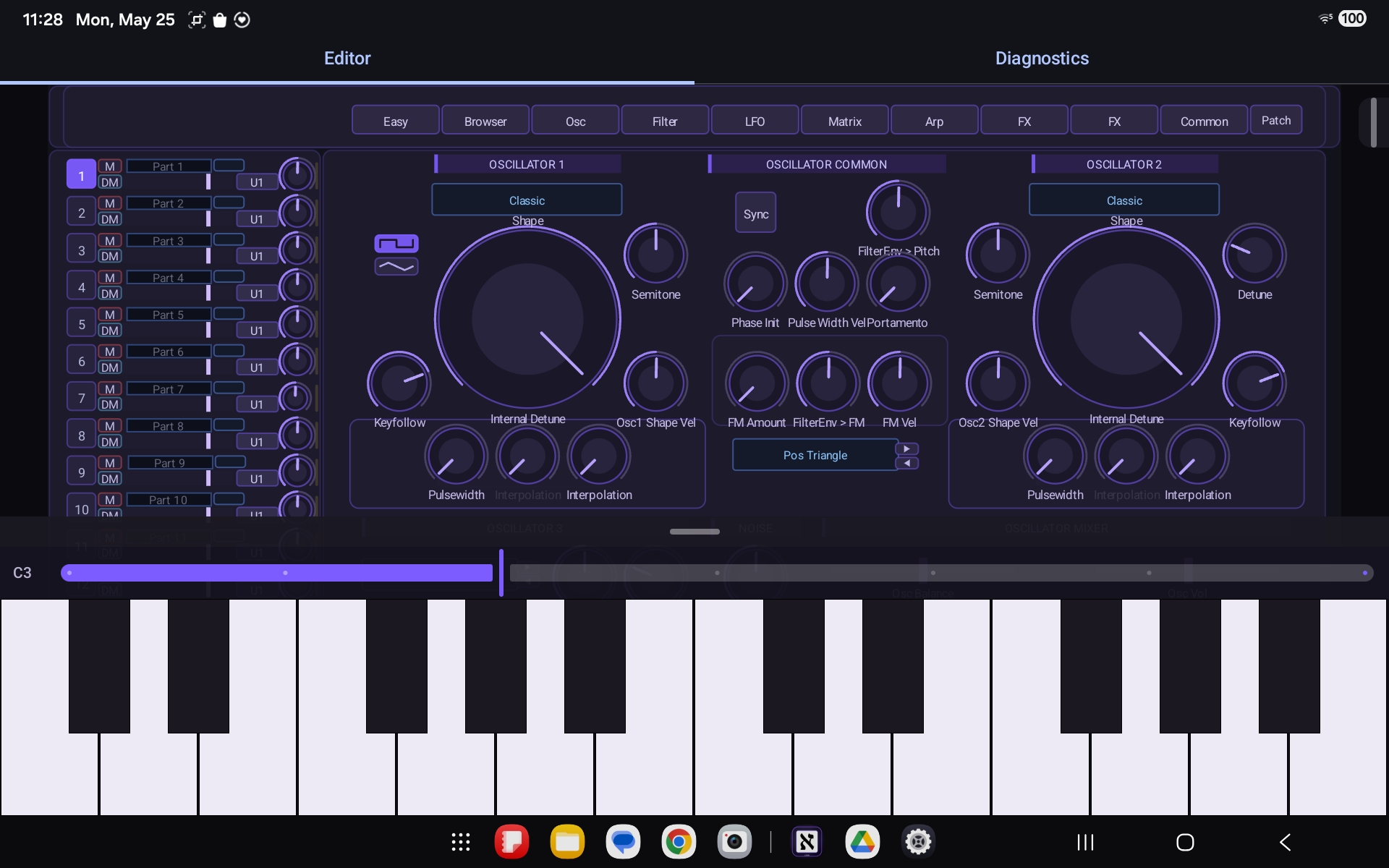
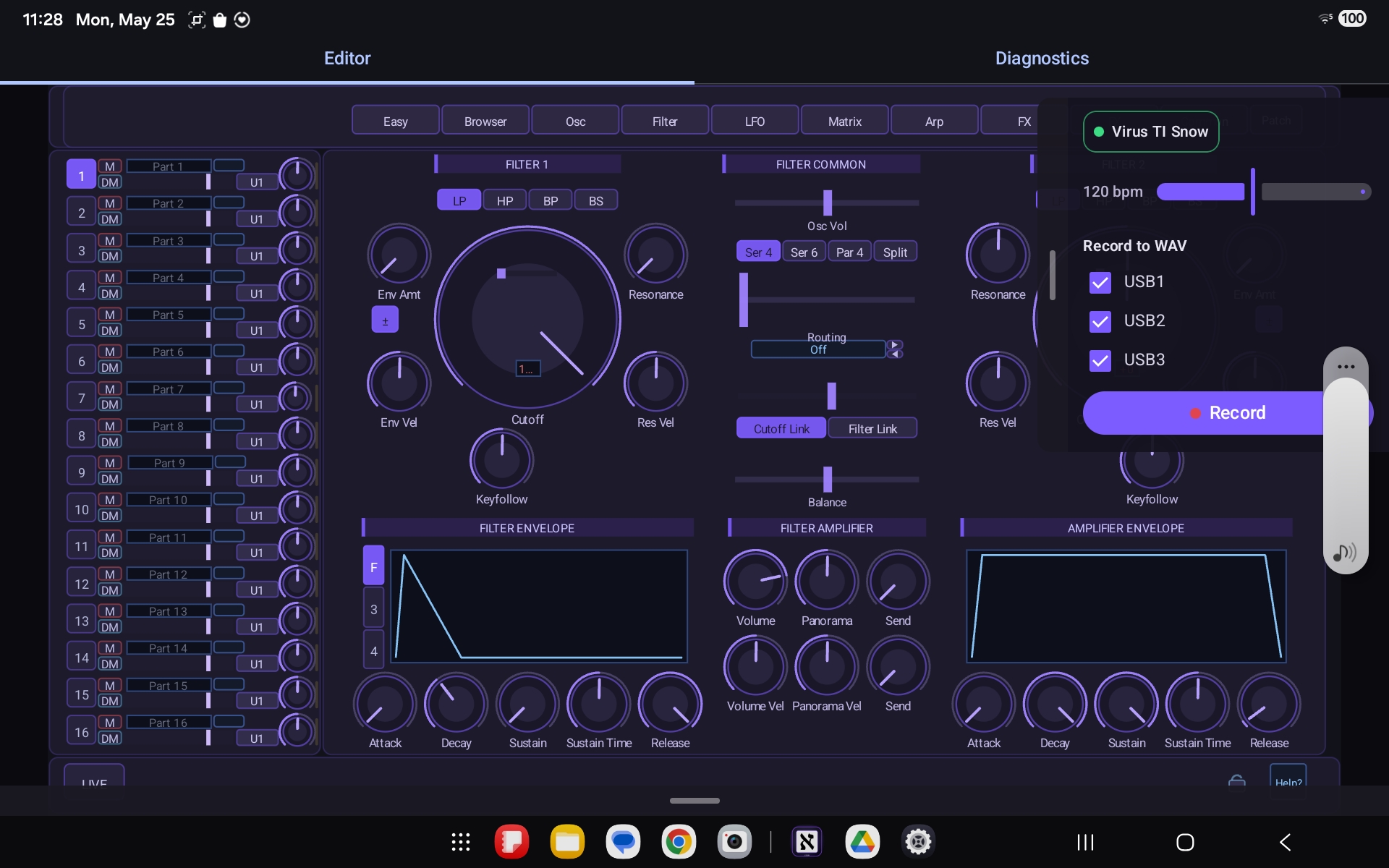
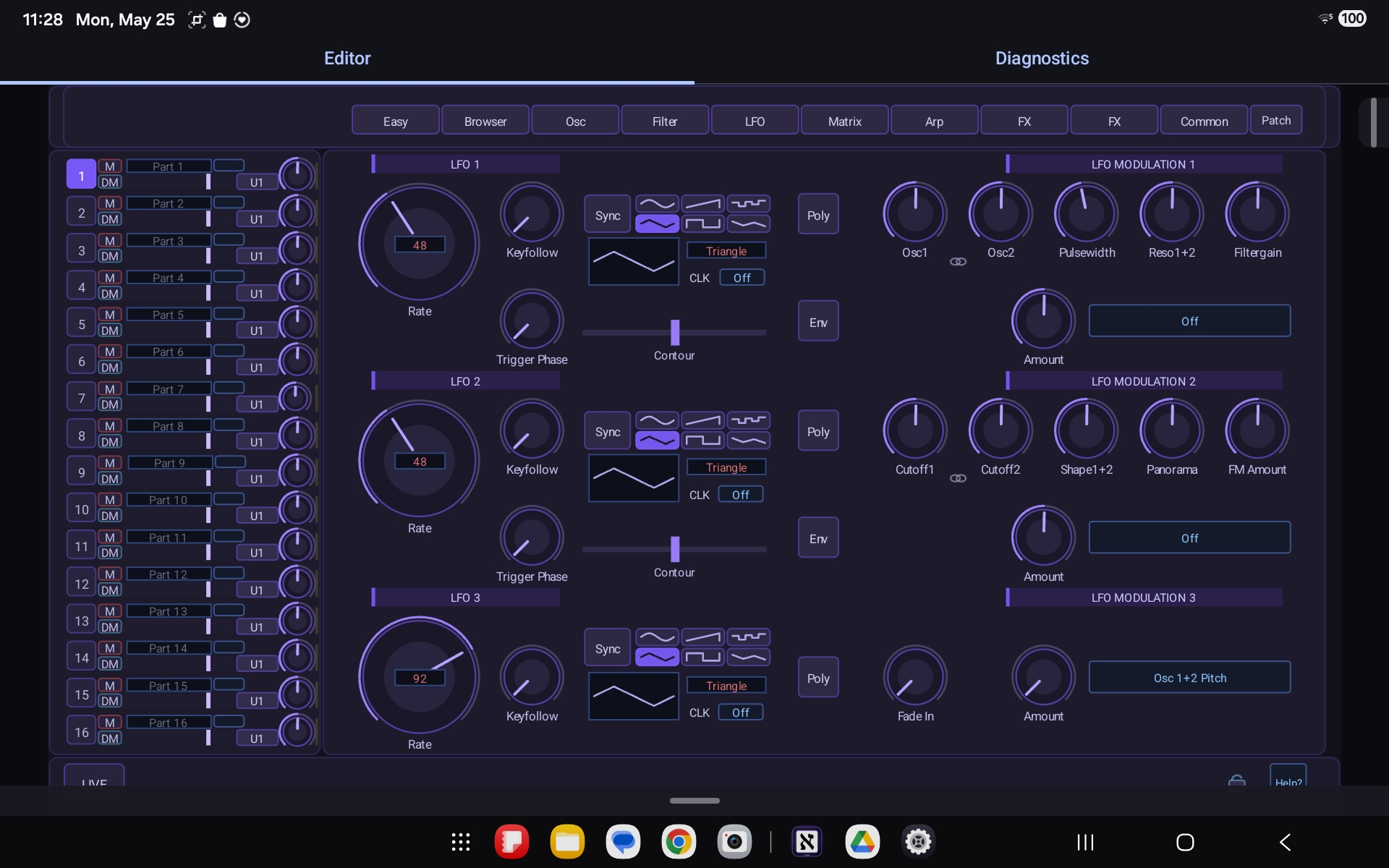
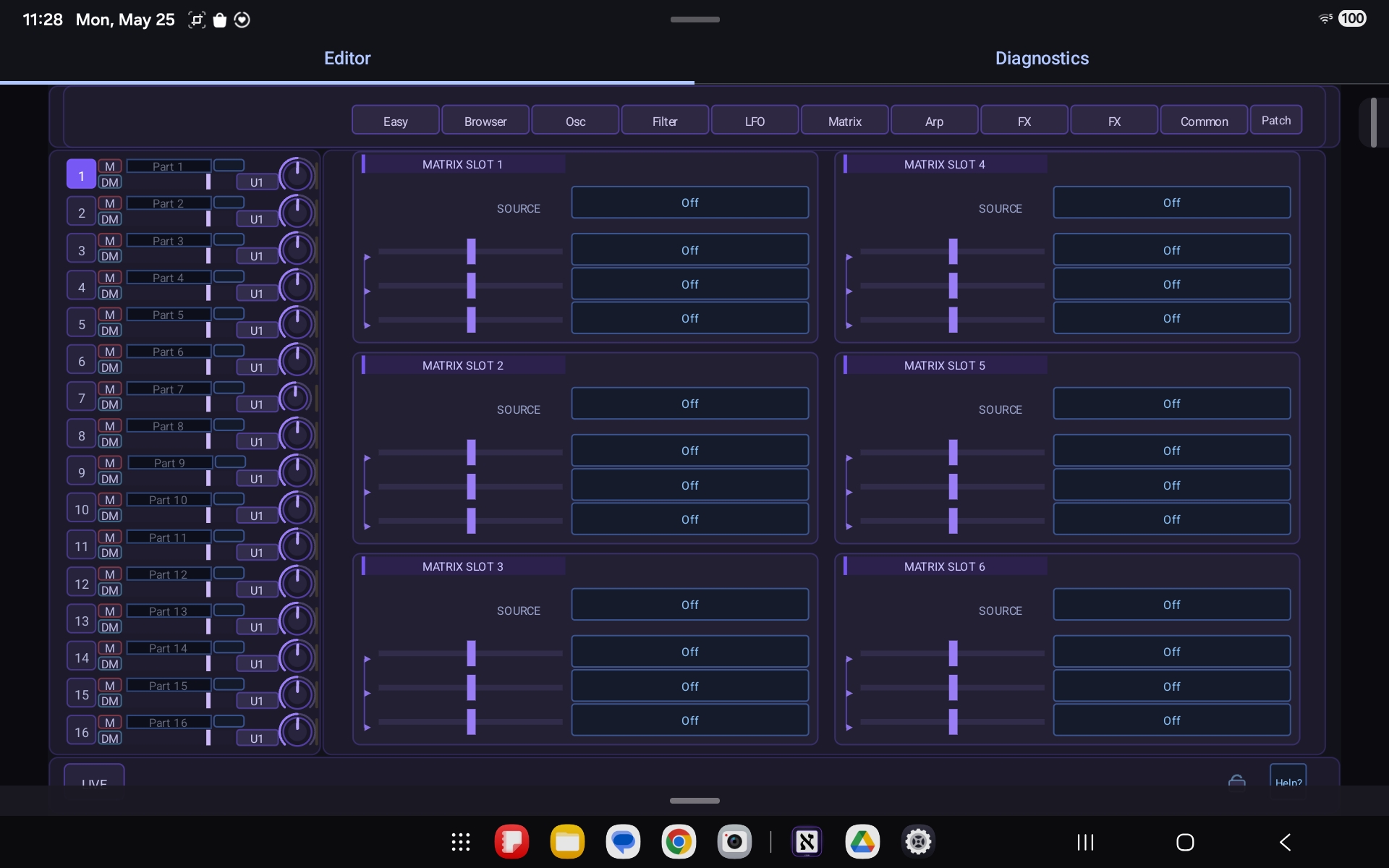
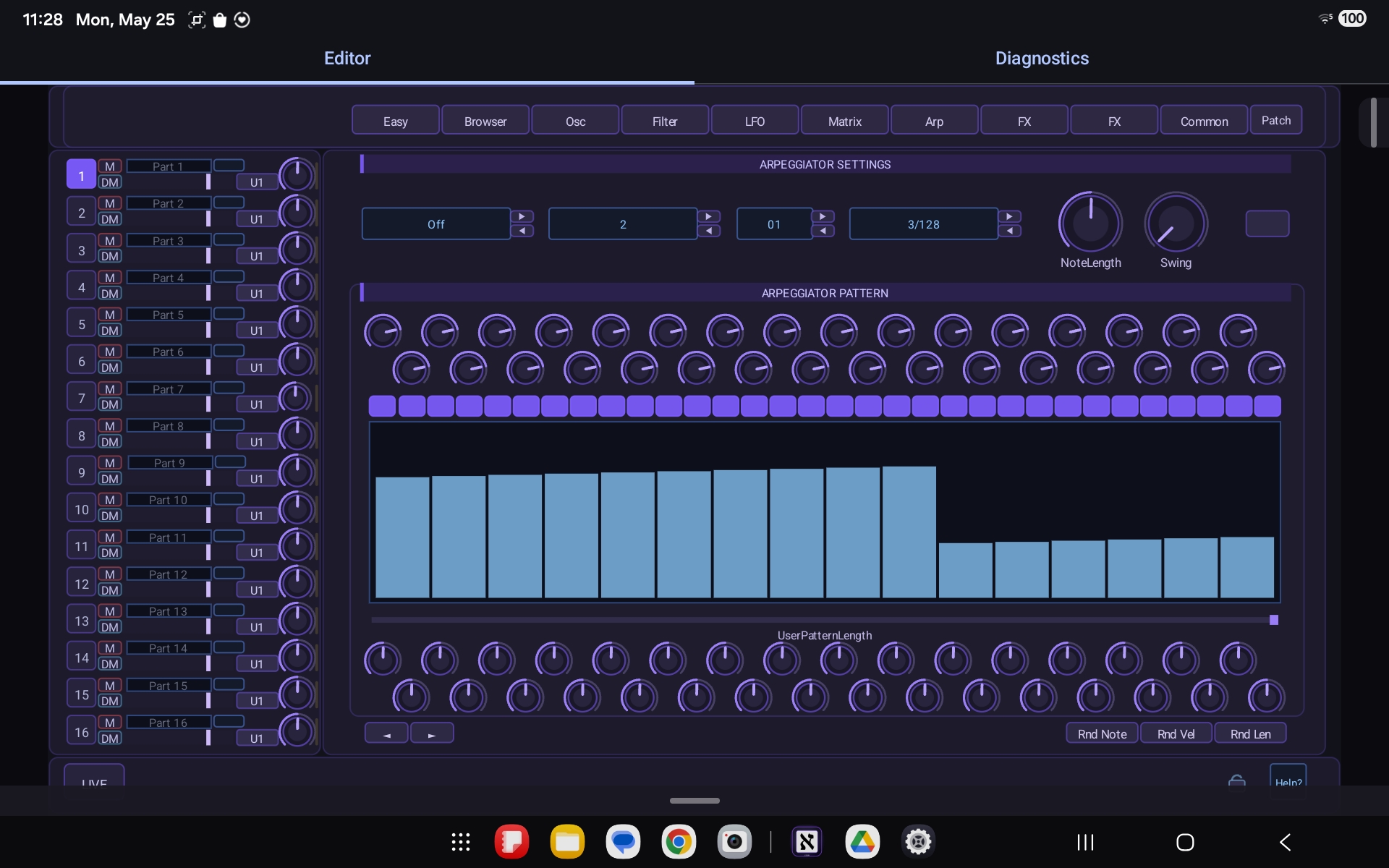
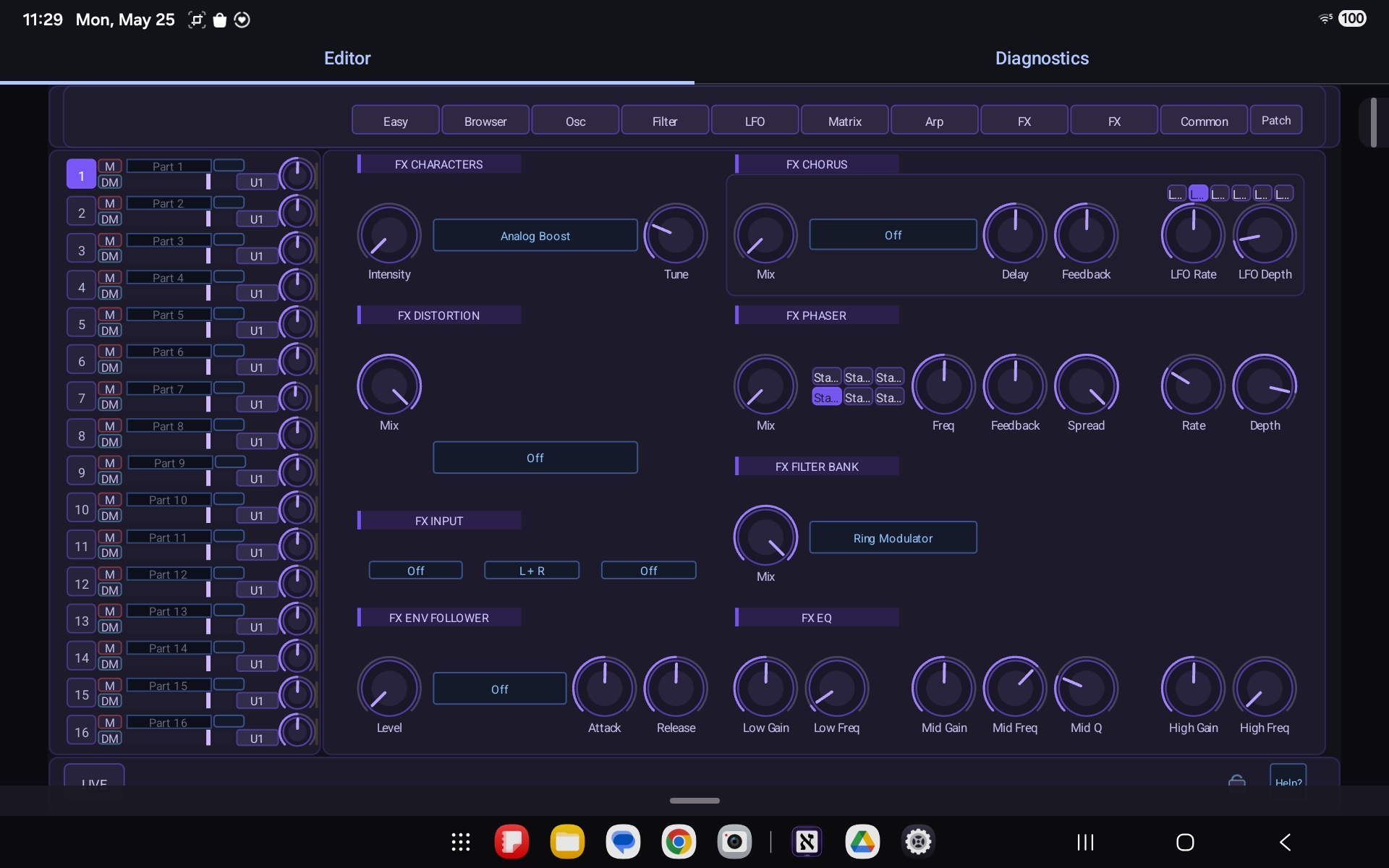
Oscillators, filters, LFOs, the modulation matrix, arpeggiator, and the full effects section — the Virus editor you already know, sourced from the documented page A/B parameter model.
Load Virux in Logic, GarageBand, Ableton Live, or any AU/VST3 host. The macOS VST3 build passes the Steinberg SDK validator 47/47 — audio, MIDI notes, and parameters.
Multi-channel USB audio capture through CoreAudio and full note / CC / parameter control over the vendor protocol — the same isochronous and control endpoints the original driver used.
Built in the open and rebuilt from a clean-room understanding of the protocol. No vendor binaries required — the core, the CLI test harness, and the plugins are all yours to inspect.
One process owns the hardware; your plugins reach it over IPC. That split is what lets a single USB device drive multiple plugin instances without a kernel driver in the middle.
A lightweight macOS app claims the Virus over USB from userspace, enumerates its audio and control interfaces, and keeps the device's keepalive stream alive.
The AUv3 extension and VST3 plugin connect to the container over XPC / IPC, so your DAW talks to the synth without ever touching the USB device directly.
Your Virus TI does the synthesis, exactly as it always has. Virux is the bridge — it speaks the device's native USB audio and vendor control protocol.
Plug your Virus TI Snow, Desktop, or Polar into your Mac or Android device over USB.
Open the container app once so it claims the device, then add the Virux plugin to a track.
Send MIDI from your DAW; audio streams back from the Virus into your session.
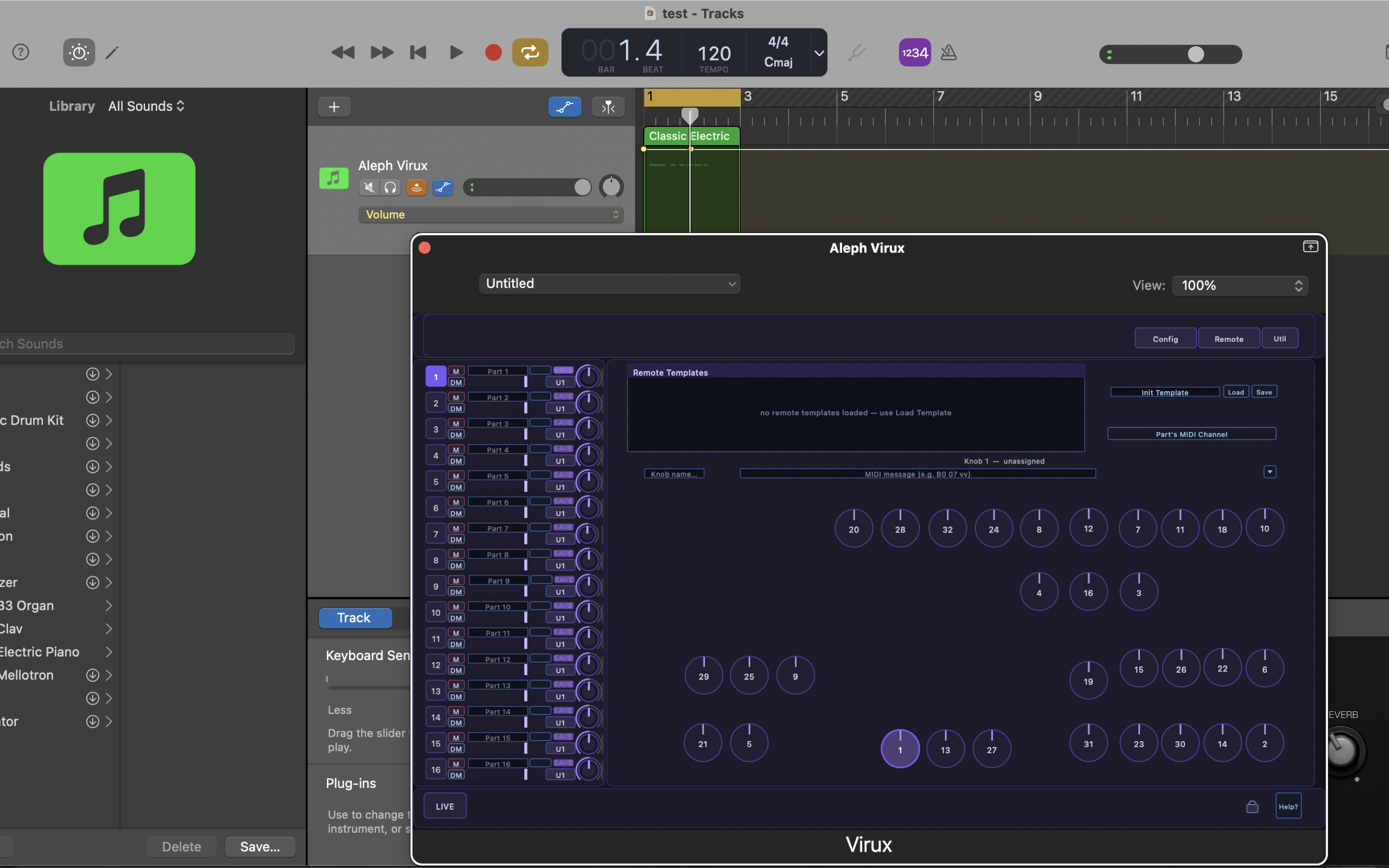
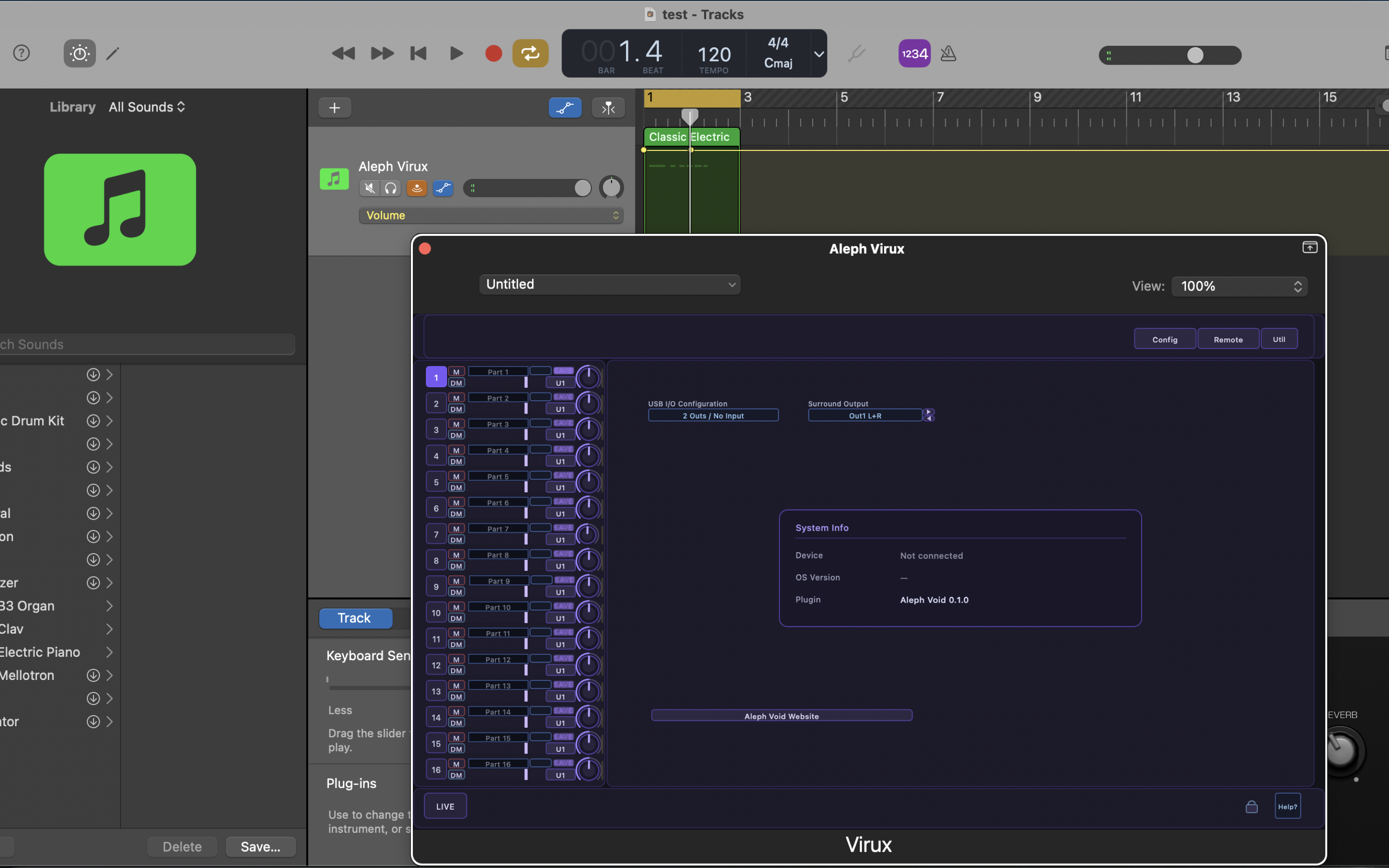
Edit patches from the on-screen control surface — every change is sent straight to the hardware.
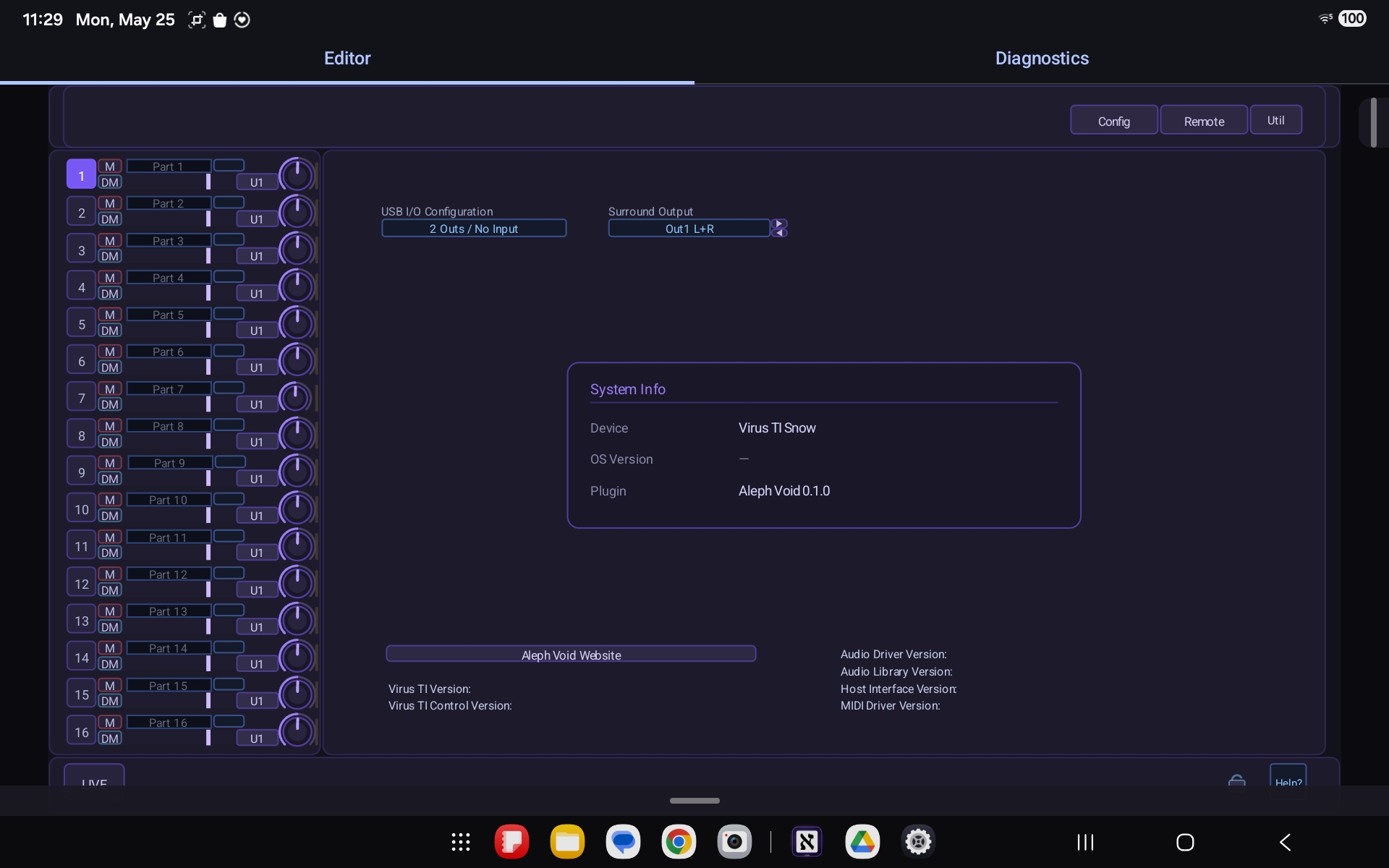
The full Virus control surface, page by page — as an AUv3 plugin in your DAW on macOS, and as a standalone app on Android. Click any shot to enlarge.
Aleph Virux targets the USB-connected Access Virus TI family. It speaks the device's native protocol directly — no Access software, no kernel driver.
Builds are on the way. Pick your platform below — we'll light these up the moment each release is ready.
Apple Silicon · AUv3 / VST3
Mac App Store Coming soonAndroid phones & tablets
Google PlayWant to know when a build drops? Email contact@alephvoid.com and we'll let you know.
The Access Virus TI shipped with an x86 kernel extension and plugins that don't run natively on Apple Silicon. Aleph Virux rebuilds that stack in userspace so your Virus TI works as a plugin again on a modern Mac — no Rosetta, no legacy driver.
The Access Virus TI family connected over USB — Snow, Desktop, and Polar. Development is confirmed against a live Virus TI Snow (USB VID 0x133E, PID 0x0815); the Desktop and Polar share the same USB protocol.
No. Everything runs in userspace over IOUSBLib. There's no kext or DriverKit system extension to approve, and no reboot to install. A small container app claims the USB device, and your plugins reach it over IPC.
On macOS, Aleph Virux ships as an AUv3 (app + extension) and a VST3 plugin sharing the same core engine. The VST3 build passes the Steinberg SDK validator 47/47, with working audio, MIDI notes, and parameters.
No. iOS does not allow the vendor-specific USB access that talking to the Virus requires, so an iPhone / iPad build isn't possible. Android, which does permit USB host vendor access, is supported instead.
Yes. Aleph Virux is built from a clean-room understanding of the device's USB audio and vendor control protocol — no vendor binaries required. The portable core, CLI test harness, and plugins are open for inspection.
The macOS driver and plugins do no networking and collect nothing — everything happens locally between your Mac and the synth. See the Privacy Policy for the full breakdown, including the Android build.
Open an issue on our GitHub issue tracker, or head to the Support page to email us. Include your hardware model, OS version, host / DAW, and steps to reproduce.